

Dragon threat: Japan deploys its first long-range missile
Dragon threat: Japan deploys its first long-range missile
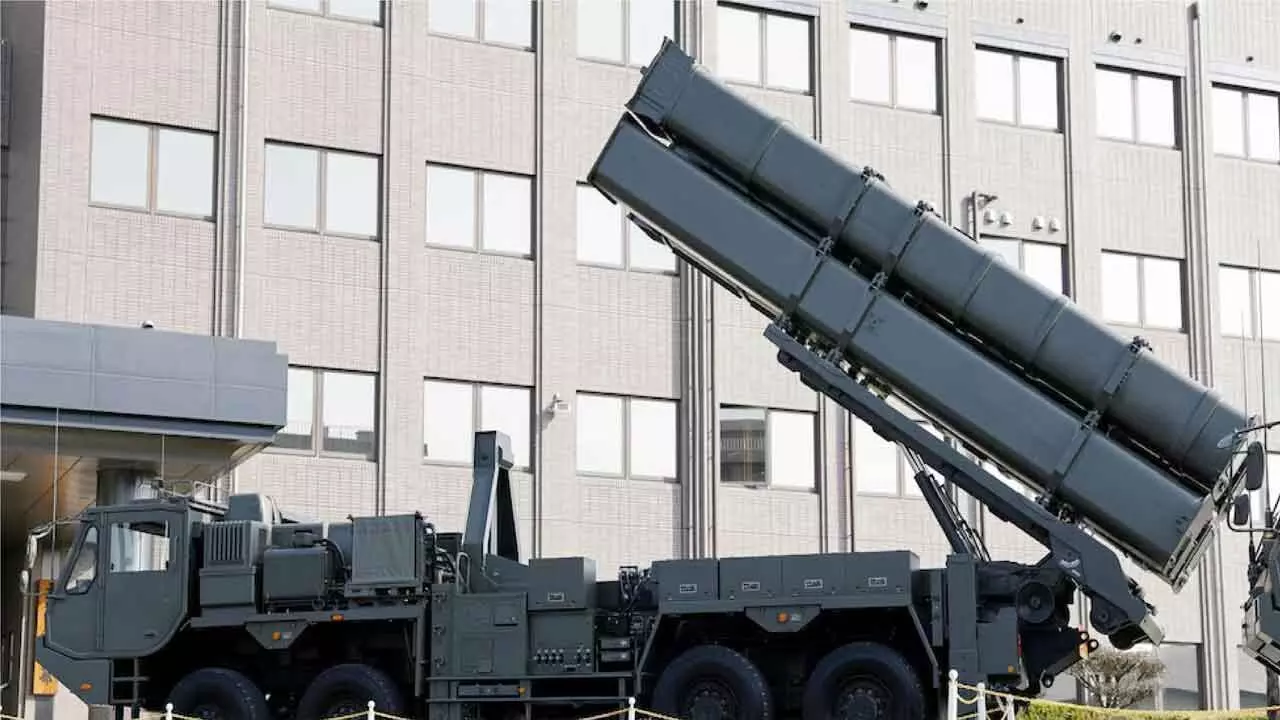
Japan's first long-range missile was deployed at a southwestern army camp, officials said Tuesday, as the country pushes to bolster its offensive capabilities.
The upgraded Type-12 land-to-ship missiles, developed and produced by Japan's Mitsubishi Heavy Industries, became operational at Camp Kengun in Kumamoto prefecture.
“As Japan faces the most severe and complex security environment in the postwar era ... it is an extremely important capability to strengthen Japan's deterrence and responsiveness,” Defence Minister Shinjiro Koizumi told reporters. “It demonstrates Japan's firm determination and capability to defend itself.”
The upgraded Type-12 missile has a range of about 1,000 kilometers (620 miles), a significant extension from the 200-kilometer (125-mile) range of the original that would allow it to reach mainland China.
The deployment of the long-range missile gives Japan a “standoff” capability, meaning it can strike enemy missile bases from afar, marking a break from the self-defence-only policy the country long followed under its pacifist constitution.
Residents opposing the deployment near the residential area staged protests outside the Kengun camp, saying it would escalate tension and increases risks the area could be targeted by potential enemies.
Japan rolls out more weapons systems
Also Tuesday, a hypersonic glide vehicle, a new weapons system designed for island defence, was deployed to Camp Fuji in the Shizuoka prefecture, west of Tokyo. Additional deployment of the upgraded Type-12 missiles and HGVs at other locations in Japan, including Hokkaido in the north and Miyazaki in the south, are planned by March 2028.
Japan also plans to deploy US-made, 1,600-kilometer (990-mile)-range Tomahawk cruise missiles on Japanese destroyer JS Chokai later this year, and eventually on seven other destroyers.
Takaichi boosts defence spending
Japan considers China its main regional security threat and has fortified the country's southwestern islands near the East China Sea in recent years. Prime Minister Sanae Takaichi 's Cabinet in December approved a record defence budget plan exceeding 9 trillion yen ($58 billion) for the fiscal year beginning April and aims to fortify its strike-back capability and coastal defence with cruise missiles and unmanned arsenals.
Japan last June spotted two Chinese aircraft carriers almost simultaneously operating near Japanese remote islands in the Pacific for the first time, sparking Tokyo's concern about Beijing's military activity stretching far beyond its borders. The defence minster last week announced the establishment of a new office dedicated to studying China's Pacific activity.
Tensions have escalated further since Takaichi's statement in November that any Chinese military action against Taiwan could be grounds for a Japanese military response. China on Monday announced that it is sanctioning a conservative Japanese lawmaker close to Prime Minister Sanae Takaichi, accusing him of “colluding with” separatists in Taiwan, the incident underlines growing tensions between Tokyo and Beijing over the self-governed island.
China's Foreign Ministry said the sanctions include banning the entry of Keiji Furuya to China, including to Hong Kong and Macao, and prohibiting his activities with organisations and individuals in China, effective immediately.
Furuya heads a bipartisan Japan-Taiwan lawmakers' consultation council and has visited Taiwan regularly. He most recently visited Taiwan's capital of Taipei, where he held talks with Taiwanese President Lai Ching-te in mid-March.
Furuya is a close ally of Takaichi who headed the election strategy for their governing Liberal Democratic Party ahead of the party's electoral victory in February.
China accused Furuya of repeatedly visiting Taiwan despite China's strong opposition and of “colluding with Taiwan independence separatist forces."





